

The Policy — What Actually Changes (Facts)
Starting March 1, 2026, South Korea will allow dogs and cats to enter restaurants and cafés under revised Food Sanitation Act enforcement rules. Previously, animals were generally prohibited from food establishments due to hygiene concerns.
Under the new regulation, pet entry is legal only for businesses that meet specific facility and sanitation requirements and receive approval from local authorities. Restaurants must verify vaccination certificates and clearly display signage indicating that vaccinated pets are allowed.
Pets cannot roam freely inside establishments. Adequate spacing between tables is required to prevent contact between animals and other guests. Businesses must install control measures such as pet chairs, cages, leash-fixing devices, or designated pet areas.
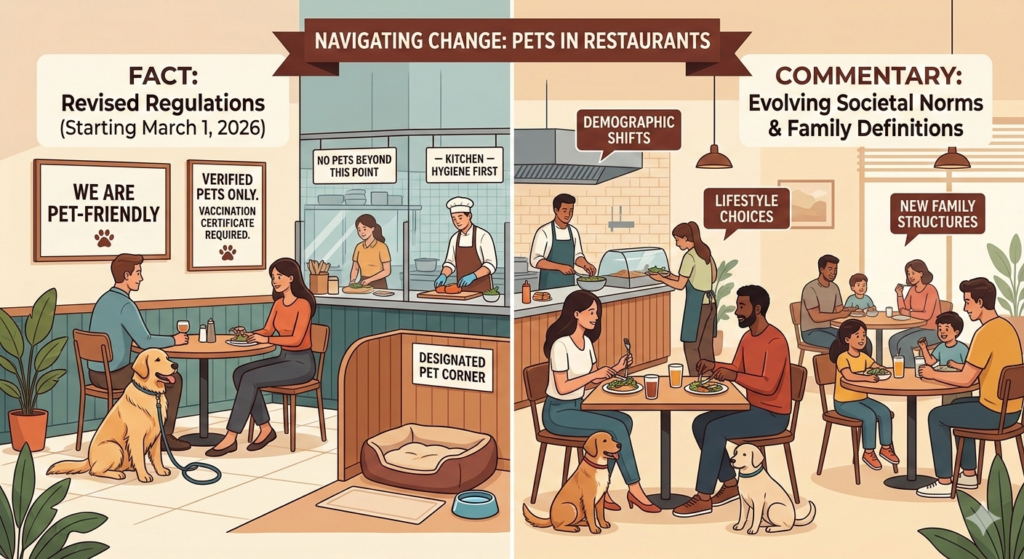
Strict hygiene rules remain in place. Pets are completely prohibited from kitchens and food storage areas. Food displays must be covered to prevent contamination, and separate pet dishes and waste bins must be provided. Continuous ventilation or air purification is mandatory.
Violations can result in temporary business suspension ranging from five to twenty days depending on severity and repetition. Liability insurance for dog bite incidents is recommended but not required.
The reform follows pilot programs and reflects the country’s growing pet population, now estimated at roughly 15 million.
Jed’s Commentary
Desk-Driven Reform and Political Incentives
One uncomfortable result of this reform is that it puts both pet owners like me, Jed, and small cafe owners in a difficult position. From my point of view, the policy feels like a decision made from behind a desk, created at the government level without fully understanding how small businesses actually operate day to day.
In modern politics, no matter the ideology, there is often pressure to support policies that sound good right away. Ideas that seem compassionate, progressive, or friendly to consumers usually receive quick public support. For example, legalizing restricted industries, expanding unconditional income programs, sharply raising the minimum wage, or distributing public funds without deeper structural reform are often presented as morally strong decisions. However, policies designed for short term approval can bring long term economic effects, such as budget pressure, rising prices, or market distortion. I think the pet access reform could end up being viewed in a similar way.

The Structural Burden on Small Businesses
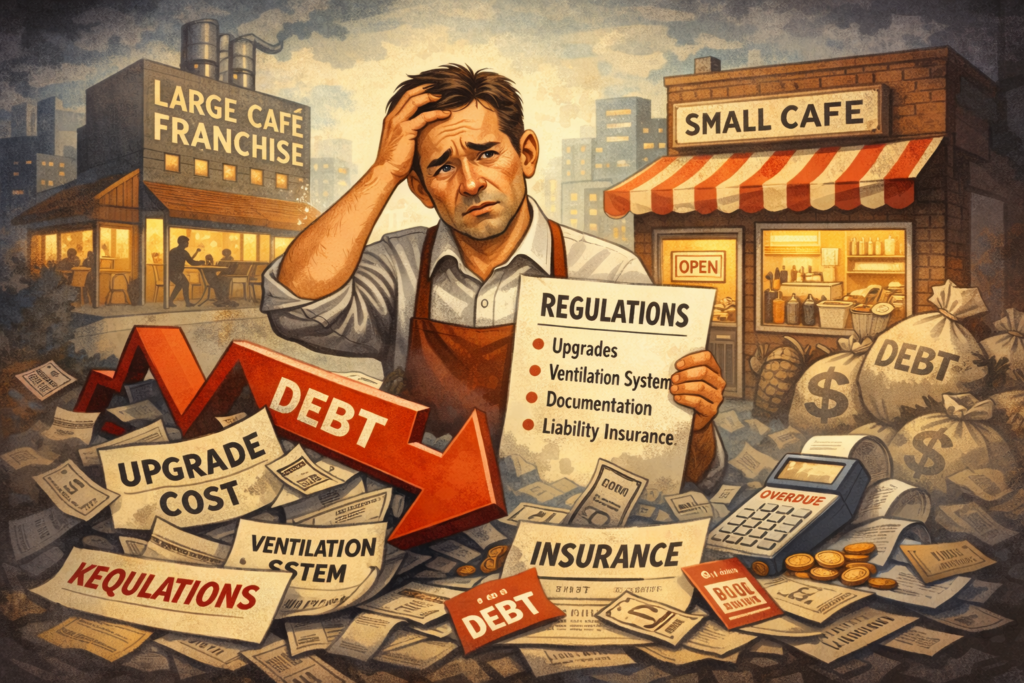
South Korea’s economy depends heavily on small, owner operated businesses. Large franchise chains may be able to handle the extra costs that come with new rules, such as upgrading facilities, improving ventilation, preparing documents, and dealing with liability issues. But small independent cafes and restaurants usually run on very thin profit margins.
For them, following new regulations is not just a symbolic issue. It means real financial risk. A rule that sounds small or simple in a law can turn into a serious operational burden in everyday business life.
Social Tension and the Question of Policy Design
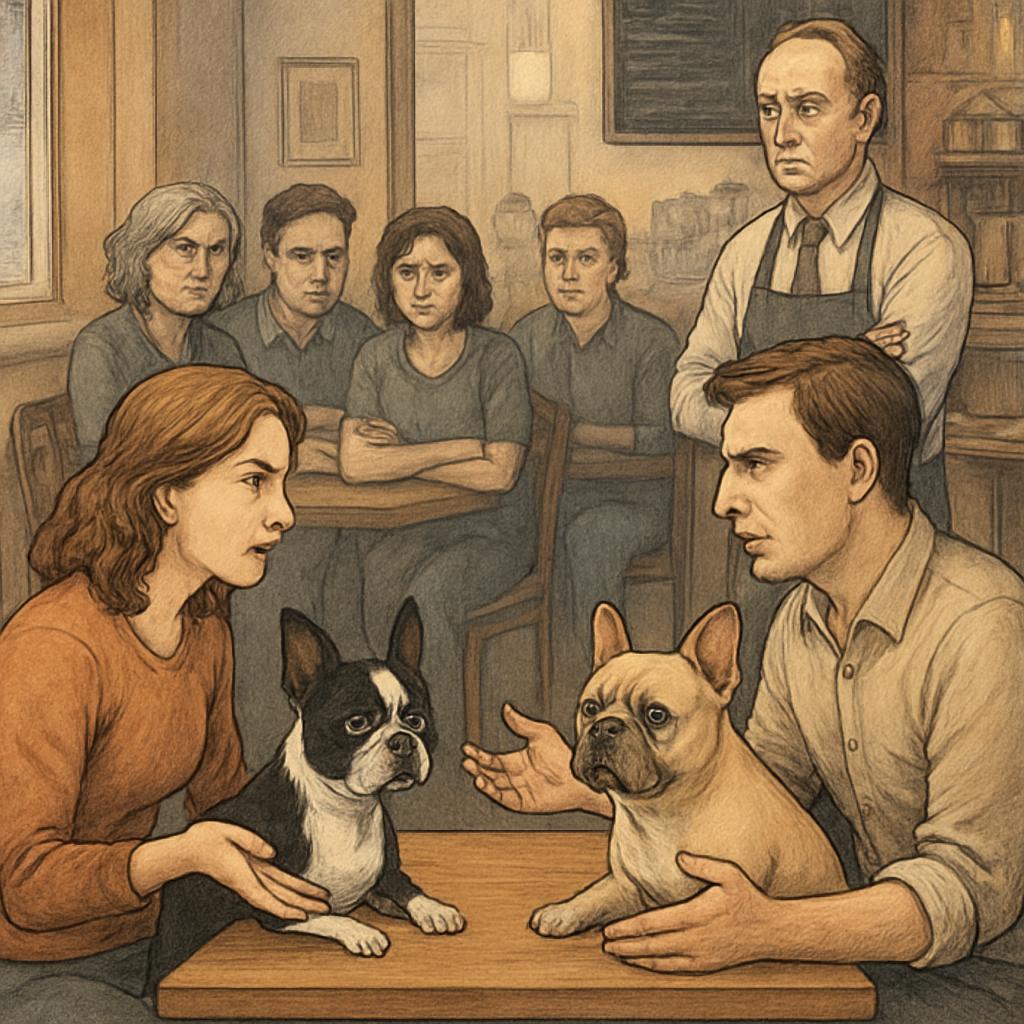
At the same time, pet owners are not automatically empowered by this change. Because each business can choose how to apply the policy, and because social attitudes toward animals are still divided, some owners may actually feel more pressure, not less. Instead of making coexistence easier, the reform could increase tension between different groups. Some people are uncomfortable with animals. Some business owners worry about losing customers. Pet owners want wider acceptance. When regulation moves ahead of social agreement, conflict often grows.
South Korea clearly needs ongoing legal reform. But when changes are seen as rushed or politically motivated, public trust can weaken, especially in a society already facing economic pressure and social fatigue. When trust declines, frustration does not stay at the policy level. It appears in everyday interactions between citizens. From my perspective, this debate is not only about pets in cafes. It reflects a larger question about how policies are designed, carried out, and absorbed within a complicated social environment.
When I first read this, I immediately thought that this was operationally unrealistic for most small business owners. The current economic stress on them is already hefty, coupled with such policies, I’m not sure how they’d cope. I like the idea of more pet-friendly spaces. But I also think this can be better thought out implementation wise.