Not long ago, I shared a story on my YouTube channel, Seoul Yellow Fellow. It was about a woman I know personally, let’s call her Mary. After her divorce, she kept telling me she felt empty. What stayed with me even more was this: she believed the divorce was her fault. She thought she didn’t love her husband enough, and that somehow led him to cheat. I didn’t see it that way. To me, his actions were a failure of responsibility, not a result of her lack of love. But what really made me think was not just their marriage, but how she tried to deal with what came after.
Is this really about money, or something deeper
Mary’s life is full of what many people chase. Expensive restaurants, luxury hotels, constant plans, and no financial stress. She is always surrounded by people. And yet, she feels alone. That contradiction made me think. Why do so many people, especially in Korea, try to solve emotional problems with money. Why is there such a strong need to show status, to upgrade everything, and to chase better and better experiences, while rarely looking beyond themselves. At some point, it starts to feel like money isn’t solving anything. It is just distracting from the real problem. The more you rely on external things to feel something, the faster those things lose their impact.
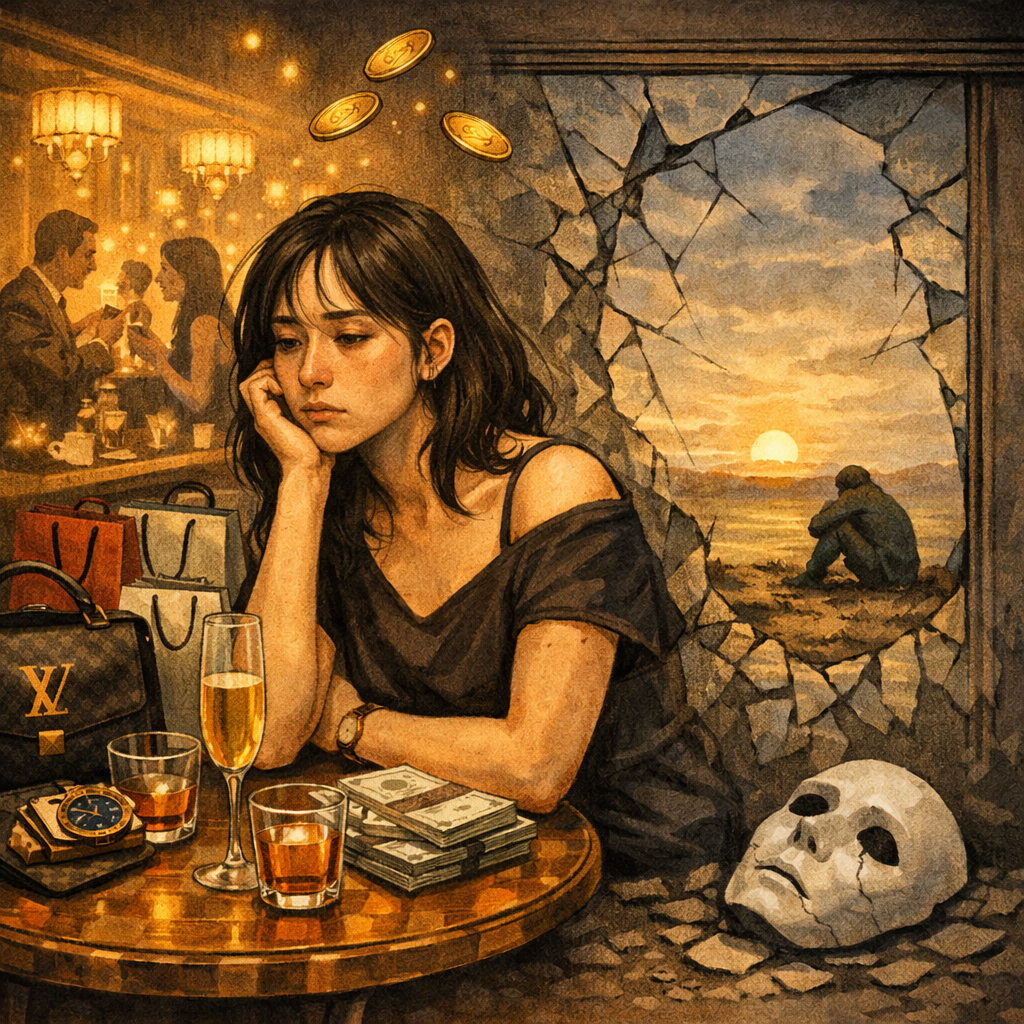
Do we avoid reality because comfort is easier
At the time, I was already deeply involved in volunteer work. I have been doing it for over a decade, and back then I was even more active. So I suggested it to Mary, very carefully. Not as a solution, but as a way to step outside of her world. To see different lives, different struggles, and maybe feel something real. She had no interest. And that response stayed with me. Because it made me realize something uncomfortable. When your life becomes too comfortable and too focused on your own level of pleasure, it becomes harder to look outward.
I think this kind of emptiness is something many people experience, even if they never admit it. But what I have noticed is that education and money do not necessarily lead to deeper awareness. In many Asian societies, including Korea, there is a strong tendency to treat money as the solution to everything. If something feels lacking, the instinct is to upgrade it or replace it. But some problems do not work that way.
In Korea especially, I often feel that higher education and higher income do not mean a higher level of awareness. People become more successful, but not necessarily more reflective. There is very little space to question what actually matters in life. And when that does not happen, it becomes easy to confuse comfort with meaning, and stimulation with fulfillment.
Mary’s story stayed with me for that reason. Because it does not feel rare. It feels familiar. And maybe that is the real problem.