

On May 16, 2025, in Dongnae District, Busan, a man in his 30s was sentenced to 18 months in prison for assaulting his downstairs neighbor over a noise dispute.
The incident took place around 2 a.m. at a residential building. The man entered his neighbor’s home and attacked them with an umbrella and fists, causing injuries that required several weeks of medical treatment. When family members tried to block him, he reportedly used a helmet to damage the entrance door.
The man had a history of depression and went to the neighbor’s home without any verified evidence of excessive noise. The attack occurred in a home where a spouse and young children were present, intensifying the severity of the situation.
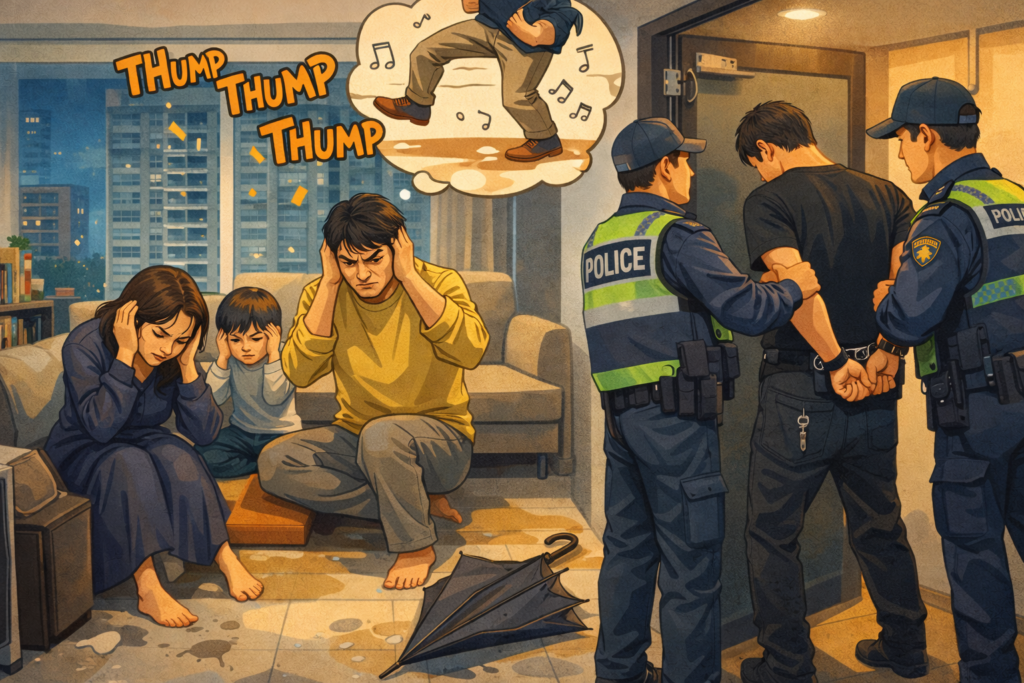
The presiding judge emphasized that the victims experienced significant physical and psychological trauma in their own home, and ruled that imprisonment was unavoidable.
This case underscores the tensions that can arise from floor-to-floor noise conflicts in apartment living. While legal channels exist to address noise complaints, violent reactions remain a serious and punishable offense.
For many residents, incidents like this bring renewed attention to the challenges of high-density housing, noise insulation, and the limits of current legal remedies — issues that are increasingly discussed in Korean apartment communities.
Jed’s Commentary
Structural Negligence Amid Soaring Apartment Prices
Despite having some of the highest apartment prices in the world, Korea still struggles with serious construction problems. In my view, the government has not effectively controlled the industry. As a result, people pay extremely high prices for homes that often do not even have basic soundproofing. Large construction companies earn huge profits, while ordinary residents deal with the physical stress and mental frustration that follow.
In recent years, violent incidents linked to apartment noise disputes have become more common. Some cases have even led to murder. For example, in November 2021 in Namdong gu, Incheon, a serious stabbing began as a dispute over noise between floors. An upstairs resident attacked a downstairs family with a weapon. Three family members were badly injured and needed major surgery, followed by long recovery periods.
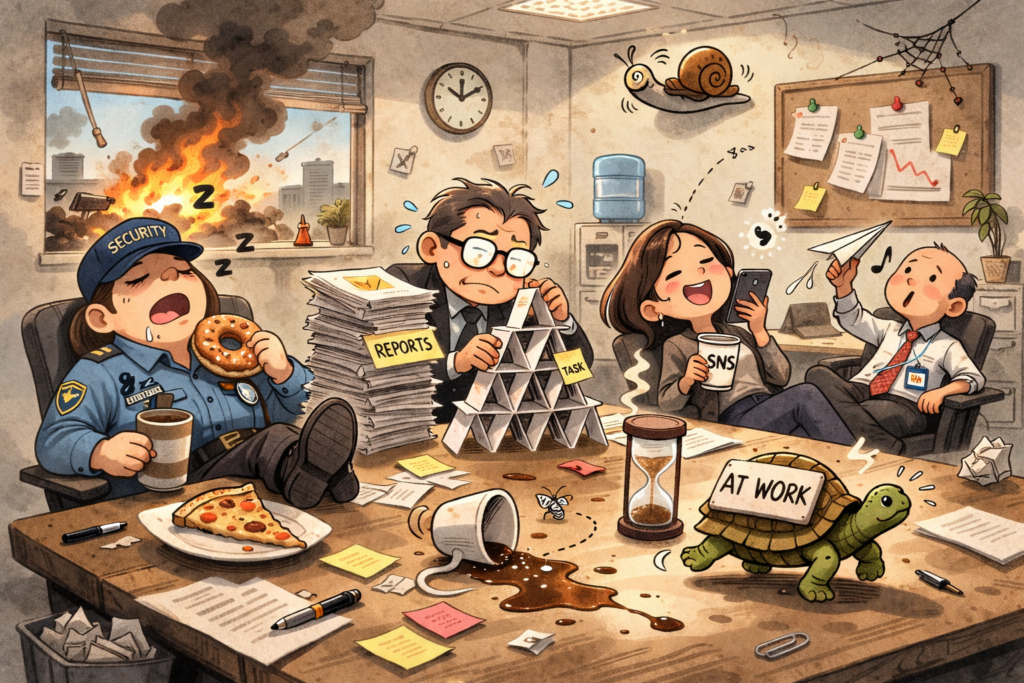
Police were sent after a 112 emergency call about the noise dispute. But the officers who arrived did not stop the attacker or protect the victims. One officer was a female officer, and the other was a middle aged male officer with experience. When the situation became dangerous, they were scared and stepped back instead of confronting the attacker. They left the scene while the attack was still happening, and because they did not act, the violence continued and later resulted in a death.
Instead of being fired, the two officers received official disciplinary punishment, and they tried to cancel that punishment through the courts. However, the courts ultimately confirmed the disciplinary actions against them. Many people saw this as an example of police protecting their own rather than protecting the public.
The police response in this case became a major topic of public discussion. Many people criticized the officers for being ineffective and not doing their job. This highlighted how weak police action and lack of ability to respond can make ordinary disputes turn into serious tragedy.
To me, this case shows a bigger problem. Weak government oversight, poor police response, and cheaply built apartments focused on profit have come together to create a serious social issue. And even now, news reports show that the problem has not gone away.
A Society Fueled by Anger
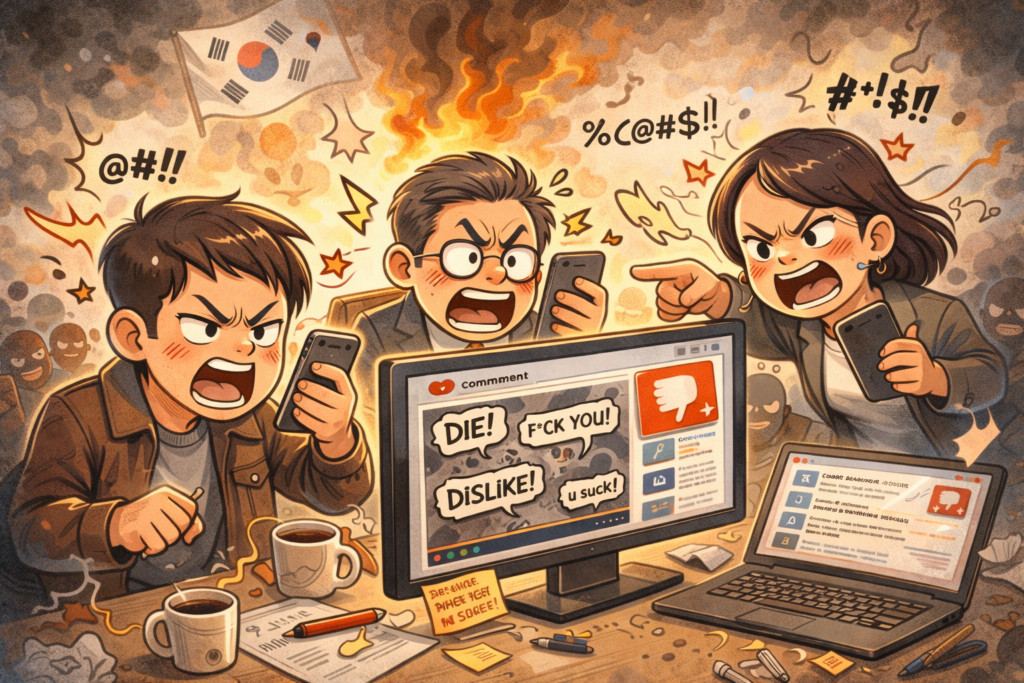
Korean society often shows very strong and sudden anger. Even on my YouTube channel, I frequently see comments from Korean (and Korean American) viewers filled with resentment and hostility, even when the video itself is harmless. Some people criticize or insult me just because of the title, without actually watching the content.
Because of this, it is not surprising that when people face real life frustrations, such as constant noise from neighbors, their reactions can grow into serious conflicts. Sometimes those conflicts even turn violent. Even as a Korean, I sometimes find it hard to understand how deep this anger and resentment can run in everyday social interactions.
Personal Encounters With Noise Conflicts
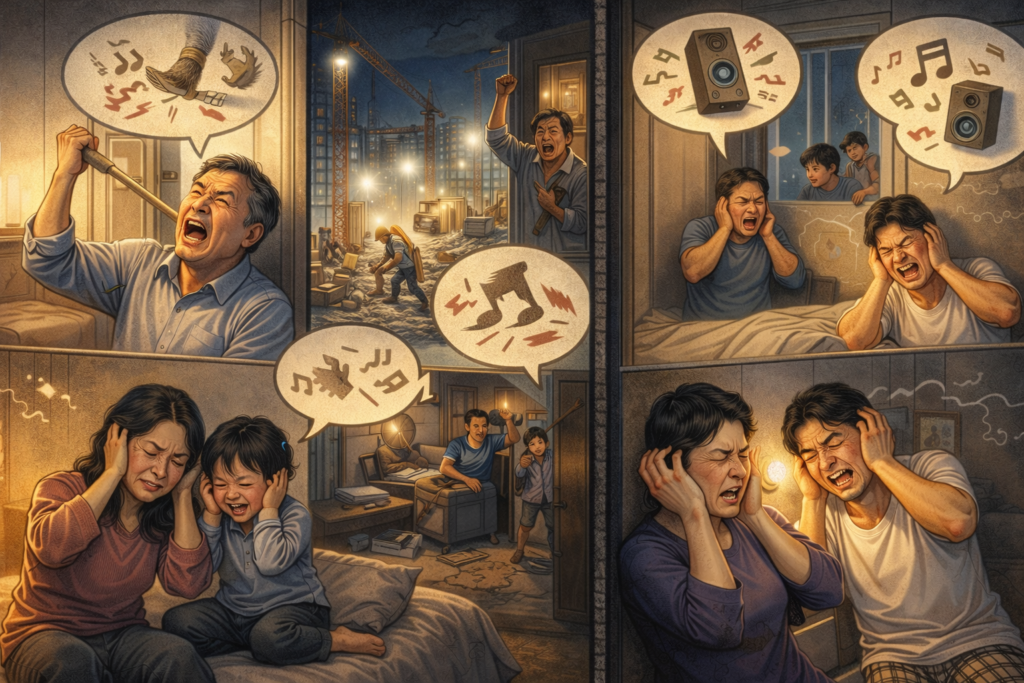
I have personally suffered serious stress because of noise coming through the walls from neighbors. I have also met couples who went through extreme hardship because of constant noise from the apartment above them.
In many cases, the people causing the noise do not want to listen or have a real conversation. They often act in a self centered way and do not seem to care about the impact on others unless they are personally affected. When I compare this to social norms in Japan, I feel that people in Korea sometimes show less consideration in these situations. Because of that, solving the problem through calm discussion can be very difficult.
In the end, I believe these repeated incidents come from several problems happening at the same time. There is weak government action, poor police response, greed in the construction industry, and a general lack of consideration in society. On top of that, there is a lot of hidden anger that many people seem to carry.
When all of these factors come together, they create a very unhealthy environment. In that kind of atmosphere, something as simple as a noise dispute can grow into a serious real world tragedy.